In Coral Gables, the Houses With the Most Rules Sell for the Most Money
September 10, 2026
September 10, 2026
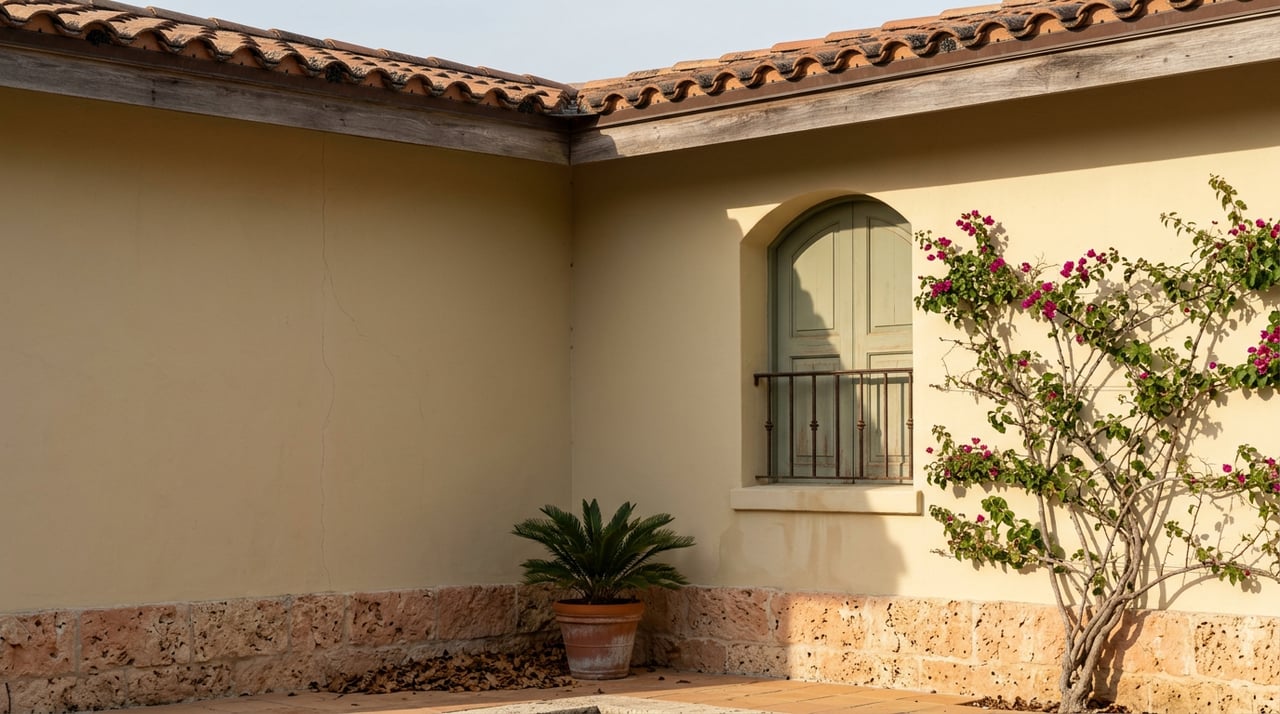
Try repainting a historic home in Coral Gables the exact same color it already is, and you still need approval. Not a rubber stamp. An actual submittal, with a physical paint sample brushed onto the stucco or wood, photographed in natural light, no digital swatches accepted, reviewed against an approved palette of roughly 60 historically appropriate colors. The Board of Architects meets every Thursday morning at 8:30 at the Building Department on Biltmore Way, and a straightforward color resubmission typically takes three to four weeks to clear.
Most buyers hear that story and assume it should show up as a discount. More friction, more delay, more ways to get told no. Basic economics says a constraint on what you can do with an asset should shave something off what someone will pay for it.
The data says the opposite. Over the twelve months ending in June 2026, Coral Gables historic single-family homes sold for roughly 11 percent more than their non-historic neighbors, and at a higher price per square foot, not a lower one. The rule that looks like a cost is functioning as a floor under the price.
The confusion starts with a real distinction most buyers never get walked through before they write an offer.
Interior work in Coral Gables is largely unrestricted, historic or not. Repaint a kitchen, replace flooring, gut a bathroom, and you are dealing with ordinary building permits.
Exterior work is a different conversation, and it splits two ways. A designated historic property needs a Certificate of Appropriateness for any exterior alteration visible from a public way, reviewed against the Secretary of the Interior's Standards for rehabilitation. A non-historic property still goes through the Board of Architects for new construction, additions, roofing, fencing, paving, even mailbox placement and material.
Either path runs through the same body. Board of Architects reviews typically take three to eight weeks per submittal cycle, and major projects often need two to four cycles before final approval, since the board almost always requests revisions on the first pass. After that clears, the project moves to plan check at Building and Zoning, which adds another six to twelve weeks for a typical residential project.
Add it up and a homeowner planning a real exterior renovation on a designated property is looking at months of process before a shovel goes in the ground. That is the part every generic guide to Coral Gables mentions. What most of them skip is what that friction is actually doing to price.
City-wide, Coral Gables is not cheap and not accelerating. Over the three months ending June 2026, the median sale price sat at $1.7 million, up 2.2 percent from the same period a year earlier, with homes taking an average of 99 days to sell. Median price per square foot came in at $859, up 15.3 percent year over year, a number that reflects a market repricing upward even as days on market lengthen.
Against that backdrop, a segment of the market with more restrictions, longer renovation timelines, and a mandatory approval process for cosmetic changes is outperforming the properties that carry none of that friction. That is the finding worth sitting with. It is not that historic homes are holding their value despite the rules. They are pulling ahead because of what the rules do to supply.
Historic designation in Coral Gables does two things at once, and buyers usually only clock the first one. It slows down what an individual owner can change. It also caps how much new competing inventory can enter the same architectural category, because you cannot build a new 1920s Mediterranean Revival house with oolitic limestone walls and a barrel tile roof and have it read as original stock. The supply of genuinely historic Coral Gables houses is fixed in a way that new construction anywhere else in Miami-Dade is not.
That scarcity has been getting reinforced from an unrelated direction. Florida's SB 4-D law requires condominium buildings three stories and higher to fund structural reserves, with no waivers available after December 31, 2024. Owners facing special assessments on aging towers have been rotating toward fee-simple single-family homes, and a fixed-supply category with a century of provenance behind it is exactly where that demand lands.
So the Board of Architects process is not a tax layered onto a good product. It is the mechanism protecting the scarcity that makes the product good in the first place. Buyers are not paying 11 percent more in spite of the approval requirements. They are paying it because the same requirements keep the street from filling up with anything that would dilute what they are buying into.
Coral Gables is not one market, and the historic premium is not evenly spread across it.
| Sub-area | Character | Where designation sits |
|---|---|---|
| Country Club section (around the Biltmore and the Granada golf course) | Mediterranean Revival homes from the 1920s through 1960s, fountains, terra cotta roofs | Historic designation most common here, architectural significance carries the largest premium |
| City Hall Historic District, Coral Way, MacFarlane Homestead Subdivision | Established local historic districts recognized by the city | Designation is the norm, not the exception |
| The seven themed villages (Italian, French Normandy, Dutch South African, Chinese, French City, French Country, Florida Pioneer) | Small residential pockets Merrick built to add variety within the Mediterranean framework | Architecturally significant and tightly held |
| Riviera section, south of Bird Road toward the University of Miami | Postwar and mid-century houses on generous lots, the highest transaction volume | Designation is a live question in the historic core, but the more common surprise here is unpermitted prior work, not designation itself |
That last row matters for a buyer's due diligence. In the Riviera section, the number one thing to check before closing is not whether a house is historic. It is whether a prior owner's addition, roof replacement, or window swap ever cleared the Board of Architects in the first place. An unpermitted change on a non-designated house is a different problem than a designated house's review requirement, and it is the one that shows up more often on the county's most liquid streets.
One detail changes the math on buying a designated property with real restoration in mind. Under Florida Statutes 196.1997 and 196.1998, owners who rehabilitate a designated historic property can apply for the Historic Preservation Ad Valorem Tax Exemption, administered jointly by Miami-Dade County and the City of Coral Gables. The exemption freezes the assessed value attributable to the improvement, not the whole property, at its pre-renovation level for ten years.
It is not automatic. The process requires a Preconstruction Review before work begins, before-and-after photo documentation, and a recorded covenant committing the owner to maintain the historic character for the full exemption term. It is a two-part application, Part I before construction and Part II after completion, and it runs through both the city's Historical Resources Department and the county's Office of Historic and Archaeological Resources. That adds lead time on top of the Board of Architects calendar, but on a substantial restoration of a 1920s Mediterranean Revival estate, freezing ten years of tax growth on the improved value can meaningfully change the post-renovation carrying cost.
Two things worth separating here, since they get conflated often. Local historic designation does not, by itself, raise a property's assessed taxes. And a separate state building-permit exemption for cosmetic work under $7,500, which took effect July 1, 2026, applies only to non-historic properties and does not touch the Certificate of Appropriateness requirement at all. If the house is designated, exterior work still needs a COA regardless of the dollar amount involved.
If you are comparing a designated Country Club section house against a similarly priced non-historic house in Riviera, the question is not which one avoids paperwork. It is which trade-off matches what you actually plan to do with the property. A buyer who wants to preserve what is there and hold for the long term is buying into the mechanism that has kept the premium climbing. A buyer who wants to gut the exterior and modernize is buying months of review cycles regardless of which side of the historic line the house falls on, since even non-designated properties in the Gables route significant exterior changes through the same board.
Get the permit history and any prior COA approvals before you close, not after. Price the tax exemption into your renovation budget if the house qualifies. And treat the Board of Architects calendar the way you would treat any other closing timeline, because in Coral Gables, it is one.
Does historic designation raise my property taxes? No. The city has stated that local historic designation does not, by itself, increase assessed property taxes. The ad valorem exemption under Florida Statutes 196.1997 and 196.1998 goes further, freezing the assessed value of a qualifying improvement for up to ten years.
How long should I budget for exterior renovation approval? Plan for three to eight weeks per Board of Architects submittal cycle, with major projects typically needing two to four cycles, followed by six to twelve weeks of plan check before a permit issues. A designated property adds the Certificate of Appropriateness step on top of that.
Is the historic premium the same across all of Coral Gables? No. It concentrates in the Country Club section near the Biltmore and Granada golf course, the City Hall and MacFarlane Homestead districts, and the seven themed villages. In the Riviera section, the bigger due diligence risk is unpermitted prior work rather than designation status.
Buying into Coral Gables' historic core is a different calculation than buying anywhere else in Miami-Dade, and the numbers only make sense once you see the mechanism behind them. If you are weighing a designated property against a non-historic one, or trying to figure out what a specific renovation plan will actually clear, Marbelys Angel can walk the comparison with you street by street. Call or message today to talk through what you are looking at.
Stay up to date on the latest real estate trends.
Whether you’re buying your first home, relocating, or investing for passive income, I’ll help you make a confident decision that builds wealth and joy.